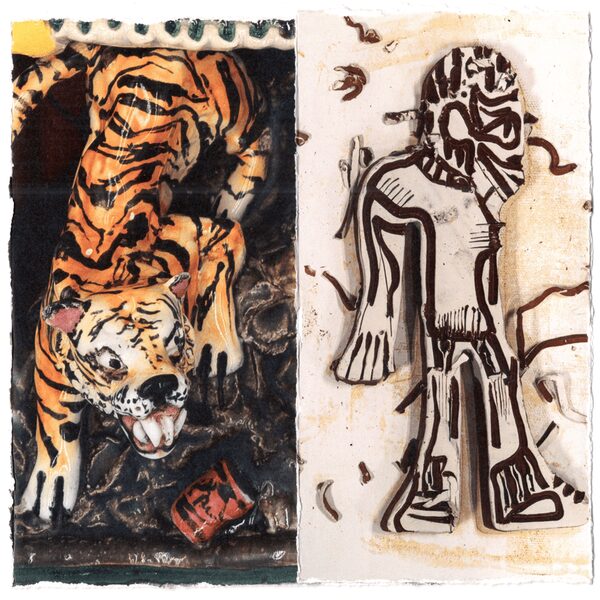
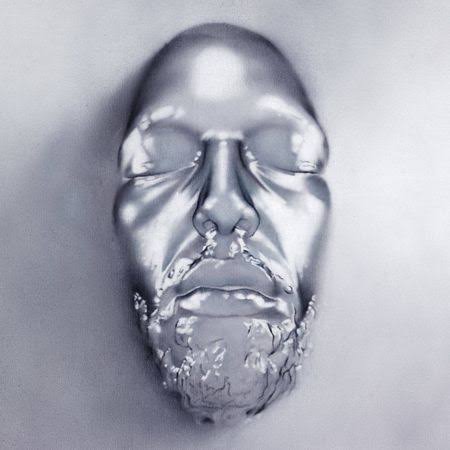
To surrender is to release control of what you cannot hold. That’s the quiet thesis behind Sir Render, Navy Blue’s third album in a trilogy and his most fully realized. Released June 5th, 2026, the roughly 45-minute project sounds like Alchemist-paced beats set against someone’s most honest journal thoughts on grief, spirituality, and death rendered in verse. Few rappers make philosophical rap feel this lived-in. Listening to Sage (as he’s known) is like sitting with Socrates in a jazz club. The title is a pun, and the pun is the point: life, the album suggests, may be a constant surrendering to whatever beautiful or horrific thing stands directly in front of us.

What makes Sir Render haunting is its narrator. Threading through the album is the voice of the late great James Earl Jones (Emmy, Grammy, Oscar, and Tony Award winner), best known as the voice of Darth Vader and Mufasa, who also happened to be Navy Blue’s cousin. His presence gives the album a weight that goes beyond musicality. It feels ancestral.

Opener “Baron” announces the tone immediately: a silky melody with drums that fade in slowly, Sage rapping with the unhurried precision of someone reading aloud from memory. His writing grips: “my tongue tied, like a cherry stem / I forgot what I couldn’t find / All along, the road twist-turn, took the words, just to burn it up.” He closes the track on the ropes and on the floor, whispering adiós to someone, or something, that’s already disappeared.
“Residuum” featuring Armand Hammer is a highlight. Dry drum rolls and spiraling strings conjure the feeling of falling, Alice-style, into something unfamiliar. Armand Hammer, the rap duo of Billy Woods and ELUCID, arrive in the second half painting the kind of images that stay with you. Woods: “Shadow’s thrown in primordial cave, while I watch, the painting looks away / tip ashes in my palm, I can’t find the tray.” ELUCID: “I’m listening to Stevie sing happy birthday / it’s not mine though / so I played it loud enough, driving slow / bending corners, hoping it might be yours.” Residuum, meaning something that lingers, like trauma residue or karmic traces, earns its title.

The following track, “Crux Ansata,” opens with James Earl Jones narrating Richard Wright’s 1940 novel Native Son, a book about the systemic effects of poverty and racism on Black Americans, structured in three parts: Fear, Flight, and Fate. (The bonus track is called “F.E.A.R.”, the album doesn’t let you miss the connection.)
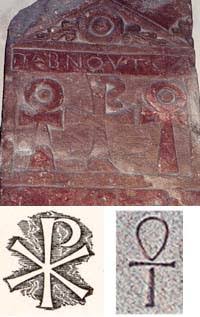
Crux Ansata is Latin for “cross with handle,” the Egyptian ankh, symbolizing eternal life and the union of opposites. Sage leans into that duality: “Is self-love self-evident, all of me settling in” and later, “Have you ever gone the distance and felt distant / Have you ever prayed, and felt no different?” The track ends with him asking for his broken wings to be healed, to be breathed back into life.
Running beneath the entire trilogy is the Jungian idea of the shadow self, the parts of ourselves we refuse to acknowledge. Jung argued that unacknowledged darkness is more dangerous than darkness accepted. “Crux Ansata” and much of Sir Render live in that tension: not the absence of darkness, but the act of turning toward it and still choosing to be kind. That, Jung might say, is where real strength lives.
Sir Render is one of Navy Blue’s best. Not many artists evolve this deliberately, this fast. It’ll leave you feeling like you just had a long conversation with an old friend about the parts of life that don’t have easy answers, and somehow, that’s enough. Stream Sir Render on your platform of choice. Liked what you read? Read more music reviews here.